History of perfume Perfume started with smoke, resin, oil, and ritual, not a bottle on your dresser. If you want to understand perfume, you have to follow scent through the evolution of ceremony, grooming, class, science, branding, and identity.
What Perfume Meant Before Modern Bottles
For a practical perfume definition, let’s first look at what perfume is. Perfume is the prepared scent that is worn on the body or used to scent objects and places. Fragrance is the smell that you get from flowers, woods, spices, resins or synthetics. The word perfume is derived from the Latin “per fumum” which means literally “through smoke.” This is why smoke was used for making perfumes for ages before oils and resins were used.
The birthplace of perfume was the temple, not the perfume shop. The ancient perfumes were made for the gods, the dead and the elite. Incense, pressed oils and resins were used instead of alcohol. Perfume bottles and perfume packaging were invented much later when the scents were easy to be stored, traded, displayed and sold.
Ancient Mesopotamia And Egypt
In your study of early perfumes, you will come across mentions of clay tablets, temples, and artisans who worked with aromatic raw materials. You should be aware, however, that “perfume” is just a typo, not a separate line of work. Fragrance in the ancient Near East was associated with cleanliness, wealth, spirituality, and prestige. They also talk about distillation, but they’re talking about the process in general, not the specific techniques used by modern perfumers.
The Ancient Egyptians used fragrance for spiritual ceremonies, funerary rites, and the bathing of the elite. Myrrh, frankincense, cinnamon, and lotus were mixed into dense, dark, hot, resinous blends, not delicate, flowery sprays. Priests would use fragrant ingredients as an attempt to speak with the deities. Oils and ointments were used to preserve the body and showed rank. It was practical, symbolic, and political.
Tapputi And The Question Of Invention
A Mesopotamian perfumer called Tapputi shows up in some records, giving the history of perfume a first-known name. That doesn’t mean she invented perfumes from nothing, though. Plants were being burned, oils were being infused, and aromatics were being used long before that. The better answer to “who was the first person to make it” is that Tapputi was one of the earliest known makers, and earlier uses existed before named inventors. The definition of perfume varies depending on the era, because temple incense, scented oil, and a light alcoholic spirit are three different things.
When Perfume Was Invented
Since the history of perfume covers thousands of years, there isn’t one specific date of invention. Aromatic substances were used in Mesopotamia, Egypt, and a lot of other places long before the modern era. The answer to “what was the first fragrance?” is thousands of years, not product launch dates. The question of “what year was it first invented” doesn’t make sense, because it started out as a sacred ceremony, medicine, personal care, or a commercial commodity.
Greece, Rome, And Scent In Daily Life
In Greece, scent was used in daily life, in grooming, athletics, and even as a marker of social rank. Oils were used to moisturize skin, applied after exercise, and associated with health and beauty. In the history of perfume, this is crucial because now perfume has entered the daily lives of individuals, not just sacred rites. Trade carried spices, resins, and oils from one region to another.
The Romans amplified this need. Bathing, dining, hair care, clothing, and houses were all scented. Wealthy Romans doused themselves in fragrant oils, often to appear cultivated, and at other times simply because they enjoyed it. But when scent was a feature of public life, it became a kind of language you could convey through your body.
The Islamic Golden Age And Distillation
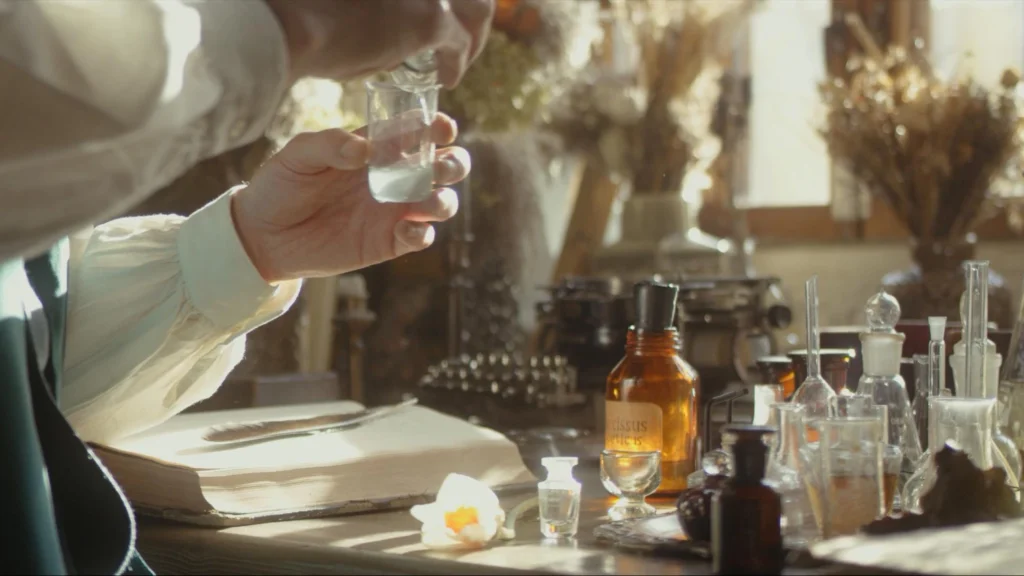
The Islamic Golden Age saw the evolution of the history of perfume from an art to a science. Arab and Persian chemists developed new techniques in extraction, such as alembic distillation, which enabled rose water, marking the first time delicate flowers were successfully distilled into a more concentrated and refined form of the original fragrance. The polymath and Persian physician Avicenna was believed to have played a role in the improvement of the technique of distilling the essential oils of plants.
This knowledge was introduced into European perfumery via trade, translation and interaction. The alembic replaced the ancient processes of maceration and incineration, and represented an intersection of medicine, chemistry, luxury, and craftsmanship. A good resource for a science-based history of perfume is the McGill Office for Science and Society perfume history explainer here.
Medieval Europe And Renaissance Perfume Culture
During the Middle Ages in Europe, the use of scent increased due to the value placed on comfort, protection and social status derived from it. Scents such as pomanders and scented gloves were worn on the body to keep away bad odours and disease. Although people sometimes believe that perfume was invented by one individual, this theory is very difficult to defend when looking at the evidence from medieval times, where a lot of the knowledge about perfume-making that had been handed down through earlier civilisations was brought in, reworked and exported around Europe.
In the Renaissance, perfume was widely used in European court life; raw materials from abroad became a sign of access to wealth and power, and perfumed accessories were integrated into daily attire. A French town named Grasse developed an important fragrance and flower production industry. Read the Perfume Society’s perfume history page for a quick introduction to this period of perfume history.
What Perfume Smelled Like In The 1700S
If your question is when was perfume invented, then the 1700s would be too late. Europeans at that time already had an array of complicated perfumes, many of which were fairly animalic. They were often rich and herbal and floral and citrusy. Many contained civet and ambergris, and these could be mixed with orange blossom or lavender or rosemary or rose or bergamot to boost the more base notes.
It’s worth taking a moment to reflect on this. 18th-century perfumes frequently covered up body odor and poor sanitation in public places. They weren’t always as subtle as modern fragrances tend to be. The potent oils, powders, pomades, and waters permeated everything from the hair to the gloves to the rooms to the linens to the garments, at least among affluent customers.
From Craft To Industry In The 1800S
In the 1800s, the history of perfume changed as the field of chemistry opened new possibilities for the perfumer. New synthetic materials allowed for a range of new aromas, and fewer rare natural raw materials were required. Glass bottles, printing of labels, and the packaging of brand names were also instrumental in making the perfume more recognizable.
The perfume industry in France began to take over the world, and perfume was sold as a commodity in department stores. It was no longer a custom-made product that was produced in small quantities, but a branded product that the consumer knew by name and logo.
The 20Th Century: Designer Fragrance And Mass Appeal
In the 20th century, fragrances were tied to haute couture, mass promotion, celebrities, and personal image. The Chanel No. 5 perfume was a prime example of a designer scent because it gained prominence not through its novelty, but by establishing that a perfume could be identified with a name, a style and a certain lifestyle.
Finally, most consumers began using scents daily, using them to project a specific persona, a specific style, to say that they were chic, wild, tidy, seductive or corporate. Through the association of scents with emotions and personalities, buyers were taught how to shop emotionally; and fragrances moved from a niche luxury to an everyday commodity.
Bottles, Packaging, And The Modern Perfume Audience
Today’s consumers don’t simply purchase a fragrance. A perfume bottle and its packaging can communicate taste, class, gender, price point, and liquidated value before you’ve even uncapped it. What marked the transition from scent to consumer product? See how perfume bottles have evolved through the years in design, branding, and marketing.
The contemporary perfume buyer has to navigate the marketplace from popular brands to indie ones, special releases, vintage bottles, artisanal houses, etc. The perfume market has become more educated and diverse. This Smithsonian article about perfume history shows how fragrance fits into grooming, beauty, and consumer culture.
A Short History Of Perfume Timeline
If you’re doing a short history of perfume search, then I’d categorize this in terms of eras. It started with aromatics, namely smoke, oils, and resins, from early civilizations. Greeks and Romans extended fragrance into personal care and civic rituals. Islamic scientists improved extraction techniques. In Renaissance-era Europe, fragranced clothing became en vogue and trade routes brought foreign ingredients into circulation.
In the 19th century, synthetic fragrance chemicals, packaging brands and large-scale retail became more common. 20th-century fashion houses released signature fragrances. These days, we have celebrity fragrances, prestige fragrances, niche fragrances and fragrances as collectibles, hobbies, memories, style and identity markers.
Oldest Perfumes And Famous Fragrance Claims
So what is the oldest perfume that we can still buy today? This depends on whether the scent has been produced continuously since its inception, the degree to which it has remained unchanged over the years and whether or not there is a direct link between the original scent and the current version. What exactly does the word perfume mean? It could mean any type of fragrant product, including an eau de parfum, a perfume oil, an extrait, a cologne or even some types of incense or sacred blends, so there are several variables to consider when looking at claims like “the oldest perfume in the world”. Eau de Cologne is frequently touted as the longest-established European fragrance but make sure you are able to back up this statement when considering a specific perfume.
When asking about the number one perfume today you need to be aware that this isn’t the same as asking which is the most important perfume, the oldest perfume, the best selling perfume or the most loved perfume. The oldest perfume is likely to be very different from the most significant perfume or the current best-seller. Equally, the perfume which sells the most today may have no real relevance in terms of its significance within the history of perfumery. So what is the right answer? That depends on what criterion you wish to use.
Common Misspellings And Search Terms
There are often some unusual search terms used in the course of history of perfume. The reason is that search terms are often typed out in as quick a manner as possible, and thus, they may contain clipped terms, swapped word order, and typo-based queries. Another search term that is frequently used is what is the best perfume in the world. There is no historical answer for this question as many different factors are involved such as taste, region, era, sales, and prestige.
This is a very important point to keep in mind, because search terms should not make you write poorly. Instead, a good article will answer curious questions naturally, by addressing the query. When a search term is awkward, treat it as a query and answer the query in plain and clear language.
- Perfume was originally made of smoke, resin, oil, and ritual prior to spray bottles.
- Mesopotamia and ancient Egypt are key to the history of perfume.
- Distillation turned the perfume process from scent to perfumery.
- Synthetic ingredients, branding, bottles, and packaging turned perfume into an industry.
- There is no one best perfume throughout the history of perfume, although some are more important than others because of their age, influence, sales, or cultural status.
Frequently asked questions
Q1: Who invented the first perfume? A1: No single inventor created perfume, but Tapputi is one of the first names recorded. This means there is evidence of her, although the use of scent was established before Tapputi existed, in religious rites, burials, medical treatment, and daily life.
Q2: What is the #1 perfume in the world? A2: There is no fixed number 1 perfume because the ranking changes based on the sales data, region, time frame, and methodology being used. Chanel No. 5 is historically important but what constitutes “the best” and what constitutes “the top-selling” are two different criteria, so look up the information from your source.
Q3: What did perfume smell like in the 1700s? A3: Perfumes in the eighteenth century tended to be stronger and heavier with base notes than many of today’s perfumes, and often more animalic. They featured florals, greens, citrus, musks, civet-like notes, and ambergris-type warmth, worn on skin, cloth, gloves, and in rooms.
Q4: What is the oldest perfume still made? A4: It depends on your definition of “still made.” Some classic eaux, colognes, and brand formulas claim continuity. Check if the brand, the formula, and the production line have remained the same.
Q5: How did perfume transition from religious incense to a daily personal item? A5: The story of perfume is a mix of trade, technology, courts, science, business, and logistics. Religious smoking and scented oils evolved into markers of status, then consumer goods, which then developed into goods associated with hygiene, brand identity, promotion, and personal identity.
The history of perfume isn’t just one discovery or one product or even one culture. It began as smoking, oils, and resins in ancient religion and society, continued with Greek and Roman traditions, Islamic developments, European aristocrats, chemistry companies, couture houses, and now the boutique producers. Your scent is both personal and fashionable, but its history lies in sacredness, therapy, money, purity, status, and memory. Knowing this story will change your next bottle from an impulsive choice to a piece of cultural heritage.